Outdoor kitchens are increasingly popular in the UK, but our climate presents challenges that homeowners in warmer countries don’t always face. Frequent rain, damp air, and cool temperatures mean that not every outdoor kitchen design will perform well year-round. If you’re planning one, choosing materials, appliances, and layouts suited to British weather makes a big difference in both usability and long-term durability.
Start With Shelter First
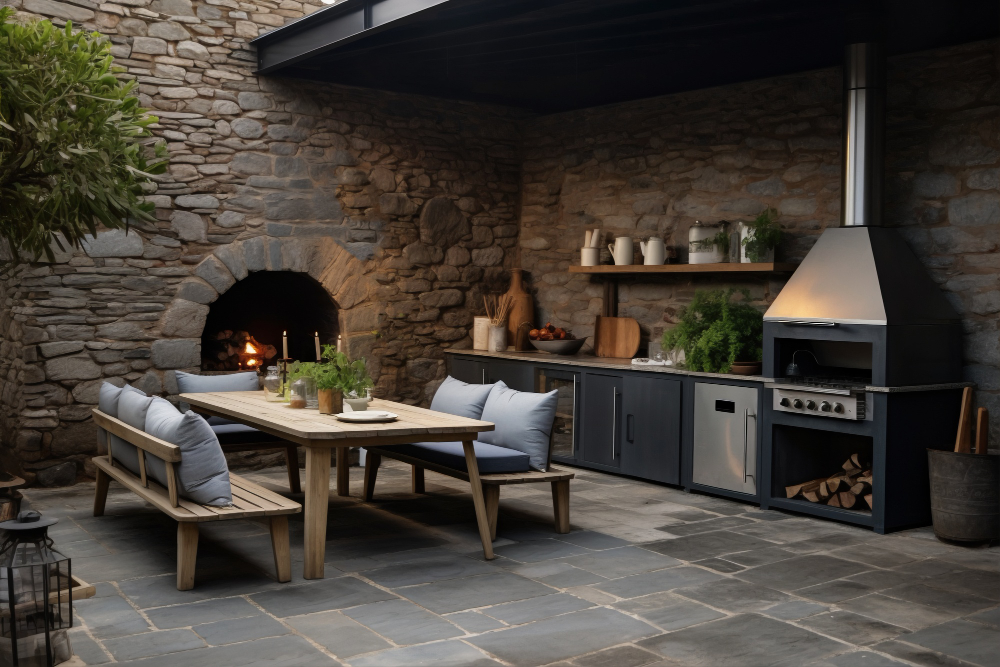
One of the most important features of a UK-friendly outdoor kitchen is adequate shelter. Unlike in warmer climates where open layouts are common, most UK outdoor kitchens work best under:
- A pergola with a waterproof roof
- A veranda or covered patio
- A purpose-built garden structure
A roof keeps rain off cooking surfaces, prevents worktops from becoming slippery, and makes the space usable far more often throughout the year. Even partial shelter can significantly extend how often you’ll use the kitchen.
Choose Weather-Resistant Materials
Materials that perform well indoors don’t always cope with damp and temperature swings. For UK conditions, the most reliable choices include:
- Stainless steel cabinets and appliances, which resist rust and moisture
- Porcelain or granite worktops, which handle frost and rain better than many natural stones
- Powder-coated aluminium frames, which require minimal maintenance
Avoid untreated wood surfaces and cheaper laminates, as these can warp or deteriorate quickly in wet conditions.
Appliances That Work in Cooler Temperatures
Gas barbecues and pizza ovens generally perform better than electric cooking appliances outdoors in colder weather. Gas burners heat quickly and are less affected by cool air temperatures.
Charcoal grills are still popular, but they can take longer to reach cooking temperature in cold or windy conditions. If you plan to cook year-round, wind protection and a sheltered location will make a noticeable difference.
Outdoor-rated refrigerators are another consideration. Standard indoor fridges are not designed for damp environments or large temperature fluctuations, so it’s best to use appliances specifically built for outdoor use.
Plan for Drainage and Flooring
UK gardens often deal with heavy rainfall, so drainage is critical. Outdoor kitchens should be installed on a slightly sloped surface or a well-drained patio to prevent standing water.
Porcelain paving, textured stone, or composite decking are good flooring options because they provide grip and resist water damage. Smooth tiles designed for indoor use can become slippery and unsafe when wet.
Heating and Lighting Extend the Season
Without some form of heating, many outdoor kitchens go unused between October and March. Popular options in the UK include:
- Wall-mounted infrared heaters
- Electric patio heaters
- Fire pits or chimineas in seating areas
Good lighting is equally important. LED outdoor lighting allows you to use the space safely and comfortably during darker evenings, particularly in autumn and winter.
Storage and Protection
Weatherproof storage is essential for keeping utensils, cushions, and accessories dry. Look for sealed cabinets or storage benches designed for outdoor conditions.
A fitted cover for the grill and worktops also helps protect surfaces from rain, frost, and debris, reducing maintenance and extending the lifespan of your equipment.
Is an Outdoor Kitchen Worth It in the UK?
When designed properly, an outdoor kitchen can be used far more often than many people expect—even in a cool, damp climate. The key is to prioritise shelter, durable materials, and practical heating. With thoughtful planning, a UK outdoor kitchen can become a comfortable space for cooking and entertaining from early spring through late autumn, and even on milder winter days.